
The Things We Cannot Fix
My cousin died suddenly about 10 days ago. It has been shocking, messy, and so sad. She was just 42.
My cousin and her older sister were deeply woven into each decade of my life. They were part of the baseline of the soundtrack of my childhood, adolescence, and adulthood. I am lucky that my parents chose to spend lots of time with this part of our family throughout my childhood, but the truth is that, as adults, we have chosen to continue those relationships. And the kids we share, who are all of similar age, are also wildly close. We spend holidays, birthdays, summer boating trips, and vacations together. My kids knew my cousin. And they were always well loved by her.
I packed up my brood last week and we made the drive to Denver to support in whatever ways we could and to attend the memorial.
For my kids, the first two days looked much like most of their time spent with my cousin’s children: video games, laughter, swapping “fits,” junk food, and driving around an unfamiliar town late at night—an adventure only complete when they got pulled over.Again.
They were generally able to avoid the intense emotions upstairs, where the adults were reliving memories, telling stories, crying, and pulling together a slideshow for the memorial.
But then the day of the memorial arrived.
When Children See Adults Grieve
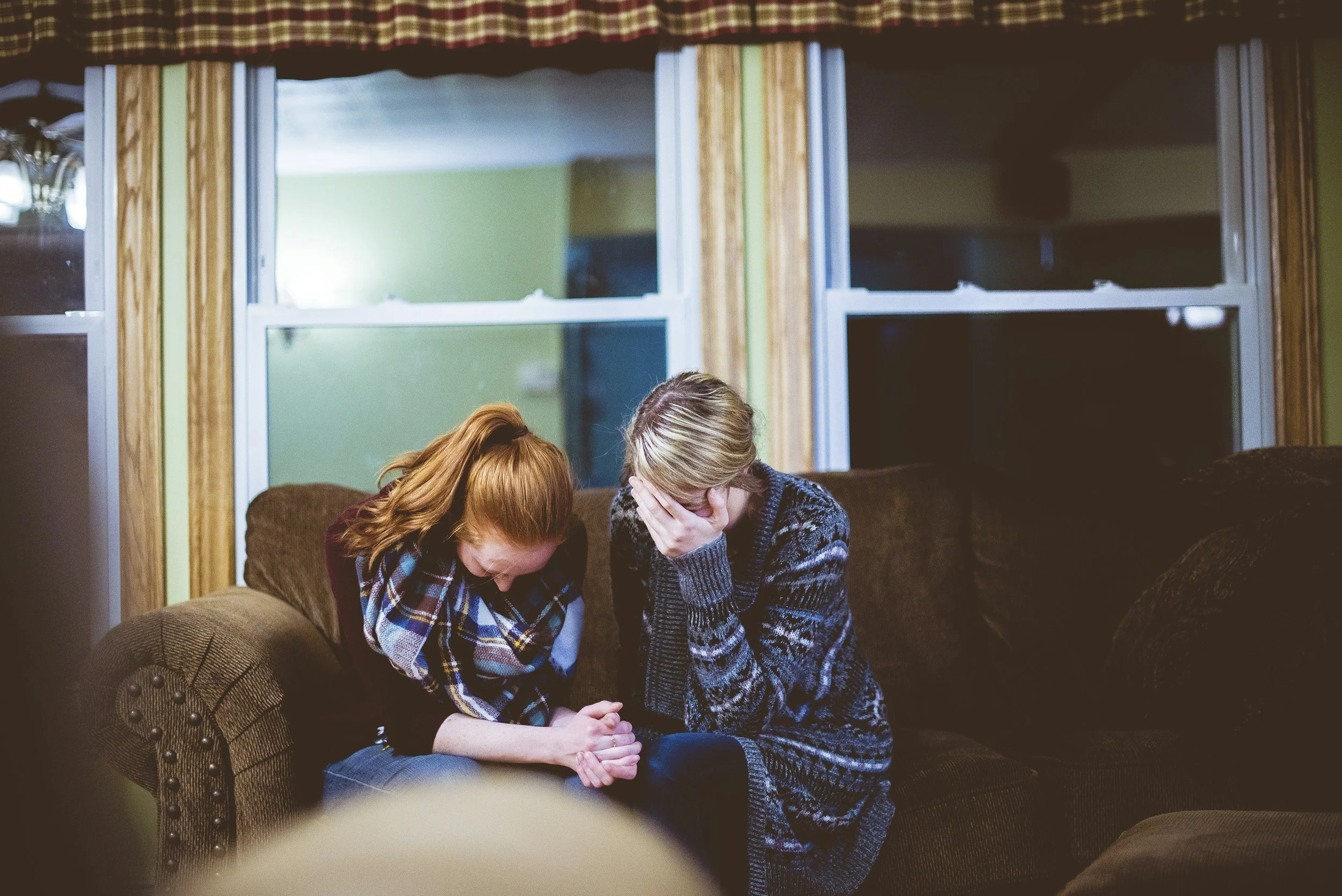
I was a little surprised by the way each of my kids responded to what they witnessed. For the first time, they encountered the pain of seeing people they love devastated by loss.
They themselves were a degree removed—until they saw their cousins, whom they love deeply, hurting.
I sat next to my eldest during the service and watched tears stream down his cheeks as he listened to the eulogy, where my cousin’s sister tried to find words for an unimaginable loss.My kids have a very close bond with her. And then my sister got up and struggled through tears to share her thoughts and memories.
My boy, who seldom shows any emotion, quietly wept.
This was perhaps the first time he—and maybe my other two—realized that the adults they count on can be shattered too. And that may be one of the hardest transitions we face in parenting older children.
We Cannot Protect Our Children From Everything
When they are little, we spend excessive energy building fences around them to protect them. We buckle car seats and bike helmets. We lather them in sunscreen. We enforce bedtimes and cut grapes in half. In some ways, we come to believe that if we stay vigilant enough, we can keep the worst things away. But eventually, they will experience life.
Their hearts will get broken.
People will leave.
Bodies will fail.
Terrible things will happen to good people.
People they love will die.
And our job changes.
There is something profoundly unsettling, especially for kids and teens, about seeing the people who have always appeared sturdy crumble beneath the weight of grief. Our children grow up believing that the adults around them can fix things—or, at the very least, hold everything together. And then one day, they see those same people heartbroken, unable to fix anything.
And they learn something else:
When you love people well, their pain becomes painful for you, too.
Helping Children Understand Grief
My kids witnessed something terribly painful that day, but also something profoundly human: A room full of people hurting because one person had loved well and left a mark.
We cannot stand between our children and grief.
We can only stand beside them.
And maybe that is not a failure of parenting, but an important evolution of it.
At some point, we stop trying to convince our children that the world is safe because nothing terrible will happen. Because we can't promise that. Instead, we help them develop a worldview big enough to hold the truth that terrible things sometimes do happen—and that people survive them.
They learn that sadness does not need to be fixed.
That grief does not need to be rushed.
That crying is not scary and does not mean someone is falling apart.
That strong people can be devastated and still be strong.
Grief and Joy Can Exist Together
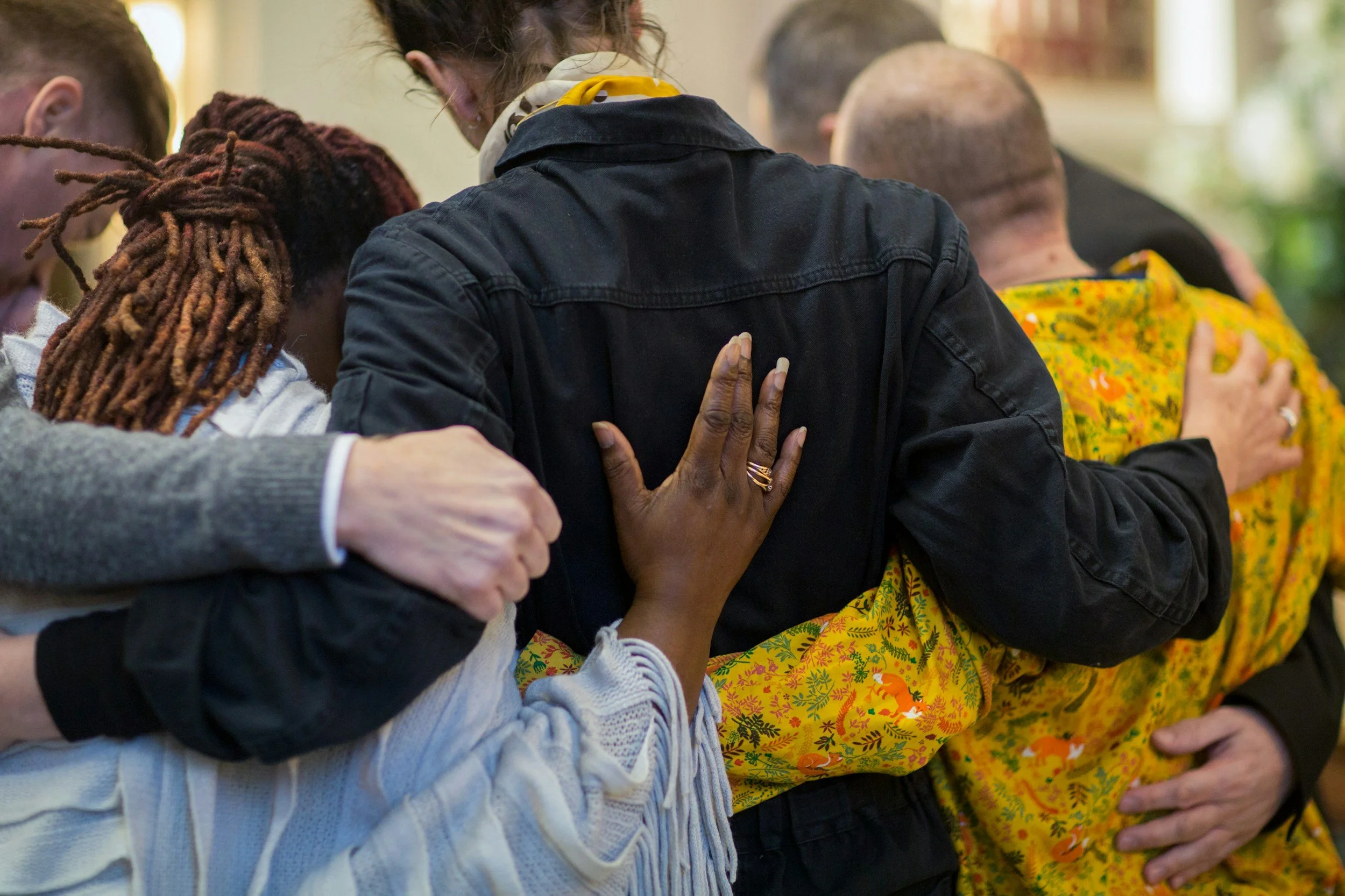
They learn that families can hurt terribly and still laugh over junk food and video games a few hours later. That grief and joy can somehow occupy the same space. That we can tell stories about someone we miss and laugh until we cry. This is one of the things I am beginning to understand about helping children cope with grief: We don't have to teach them how to stop being sad.
We can help them understand that sadness can exist alongside love, laughter, connection, and even ordinary moments. Grief doesn't follow a straight line. A child can cry one moment and ask for a snack the next. A teenager can seem completely fine and then become overwhelmed by a memory days later. They may want to talk about the person who died, and then they may want to play video games.
None of this means they aren't grieving. Sometimes, this is simply what grief looks like.
Teaching Children That They Can Survive Pain
Most importantly, perhaps they learn that they can survive deep sadness. That they do not need to run from pain—their own or someone else's. They can sit beside someone they love who is hurting, even when they have absolutely no idea what to say. That is something I want my kids to know how to do. Because someday I won't be able to build fences around them. In many ways, I already can't.
I cannot promise them that the people they love will always be here.
I cannot promise them that life will be fair.
I cannot promise them that they will never experience the kind of grief that knocks the wind out of them.
But I can stand beside them while they learn that they can survive it. I can let them see me cry and also let them see me laugh again. I can let them watch the people they love fall apart and then slowly put themselves back together. I can help them understand that grief is not evidence that something has gone terribly wrong with us.
It is evidence that someone mattered.
The Lesson I Would Never Have Chosen
I would never have chosen this lesson for my children. Certainly not now. Certainly not this way.
But my cousin spent her life loving them, teasing them, laughing with them. And perhaps there is one final thing her life is teaching them now:
Love people enough that losing them hurts.
Show up when the people you love are hurting.
And when there is nothing you can possibly do to fix it, sit down beside them and stay.
Helping Your Child Through Grief

Every child experiences grief differently. Some children want to talk. Others may need space. Some may show their sadness openly, while others may process their emotions through play, questions, changes in behavior, or simply needing extra closeness.
If your child or teen is struggling with grief, anxiety, emotional regulation, or another concern following a loss, professional support can sometimes provide a safe space to process what they're experiencing.
At Wasatch Learning & Wellness in Sandy, Utah, our therapists work with children, teens, and families navigating a variety of emotional and mental health concerns. Our goal is not to rush difficult emotions away, but to help young people develop the understanding and skills they need to move through them.
Not sure where to begin? Schedule a free consultation with a Psychologist to discuss your concerns and determine what type of support may be the best fit for your child or family.
Clear Insight. Meaningful Change.
About Wasatch Learning & Wellness
At Wasatch Learning & Wellness in Sandy, Utah, we provide comprehensive psychological evaluations for children, teens, and adults, along with compassionate therapy services for ADHD, autism, anxiety, depression, learning differences, and other mental health concerns. Our mission is to help individuals and families better understand themselves through expert, evidence-based care that leads to lasting growth.
Whether you're seeking answers through a psychological evaluation or looking for ongoing therapeutic support, our experienced team is here to help you move forward with confidence, clarity, and compassion.
