
This morning, like most mornings, my eyes popped open, and I immediately began scrolling through the day's commitments on the mental calendar in my head.
One kid needs to take an absence excuse form to each of her teachers for the days she'll miss over Thanksgiving. The oldest works right after school, so the middle will need to be picked up at his brother's work and taken straight to his indoor soccer game. Which means his soccer bag needs to be packed and waiting in the backseat of the car.
And what did I plan for dinner? Oh, right. I need to get the meat out of the freezer to thaw. And did I notice we're out of diced tomatoes?
Prescriptions need to be picked up. I'll ask my husband to do that. And while he's out, he can grab another can of diced tomatoes.
Oh, and what about that grade replacement that still hasn't been posted? Kid #1 needs to follow up on that.
All of this before my feet have even hit the floor.
If you're a mom, chances are you recognize this familiar pre-dawn barrage of thoughts. It's the mental juggling act that keeps our households, schedules, and families moving forward. And it requires a pretty impressive collection of skills known as executive functioning.
What Is Executive Functioning?

Executive functions are the mental processes that help us manage ourselves and our behavior in pursuit of a goal. These skills rely heavily on the brain's prefrontal cortex and its connections with other brain regions, systems that continue to mature well into early adulthood.
Think of executive functioning as your brain's executive assistant. These are the skills that help us keep track of what needs to be done, prioritize competing demands, estimate how much time we need, figure out how to get things done, and stay on track long enough to actually finish.
Executive functioning includes several interconnected skills:
Planning and organization: Keeping track of responsibilities, prioritizing competing demands, breaking larger tasks into manageable steps, and managing materials, deadlines, and information.
Task initiation: Getting started on something, even when it's boring, overwhelming, unpleasant, or when we're not entirely sure where to begin.
Working memory: Holding information in mind long enough to use it, like remembering a set of instructions or keeping track of what we were doing before we got distracted.
Inhibition: Pausing before acting, resisting distractions, and thinking through potential consequences.
Cognitive flexibility: Adjusting when plans change, shifting between tasks, and considering alternative solutions when something isn't working.
Emotional regulation: Managing emotional responses so that frustration, disappointment, or anxiety don't completely derail our ability to function.
Self-monitoring: Recognizing how we're doing, noticing mistakes, and adjusting our behavior when things aren't going as planned.
These skills work together throughout our day, often without us even noticing.
Consider something as seemingly simple as getting out the door in the morning. You need to estimate how much time you have, remember what you need to bring, prioritize tasks, resist distractions, manage unexpected problems, and keep an eye on the clock. That's a tremendous amount of executive functioning before you've even left the house!
Executive Functioning Skills Don't Develop Overnight
Strong executive functioning skills are essential for independent living, academic success, relationships, and eventually, success in the workplace. But here's something important to remember: These skills develop gradually, and not at the same pace for everyone.
While executive functioning challenges are especially common among individuals with ADHD, they aren't exclusive to ADHD. Anxiety, depression, autism, learning disabilities, chronic stress, sleep difficulties, and other factors can interfere with these skills. Even adults with otherwise strong executive functioning can struggle when they're overwhelmed, exhausted, or under significant stress.
Children develop executive functioning skills through a combination of brain maturation, instruction, modeling, and lots of practice. They learn best when we provide systems and structures that allow them to practice managing responsibilities with increasing independence.
Think about the typical elementary school classroom. My kids all had binders that included the important information they needed to access their online learning, and planners (calendars) where they recorded what they did at school each day and documented their homework assignments. They marked days off and special events on their calendars, learning to anticipate upcoming events and prepare for changes to their routines.
And elementary school teachers are the undisputed kings and queens of organizational systems. Color-coded baskets, visual schedules, lanyards with the steps of classroom procedures, carefully labeled supplies, QR codes, usernames, and passwords are just a few of the systems they masterfully design.
All of these tools serve a purpose: They help children learn to navigate their environment with increasing independence.
We don't expect most third graders to manage their daily responsibilities without these structures in place. By high school, however, many teenagers are managing a great deal on their own.
But not all of them. Some kids continue to need these systems and supports long after their peers have become more independent.
You may have one child whose grades you never need to check, who knows exactly when and where their next soccer game is, which park they're playing at, and what time they need to arrive.
And then there's the other child. Perhaps even the older one. The one who couldn't tell you the first thing about that string of 12 missing assignments and who now owns 14 pairs of blue socks because you've had to replace the uniform socks that were lost, left at sleepovers, or mysteriously vanished into the universe.
Same parents. Same household. Very different executive functioning skills. And that can be incredibly frustrating for everyone involved.
How Can We Help Children Develop Executive Functioning Skills?
When our kids struggle with organization, time management, follow-through, or remembering responsibilities, it's easy to fall into the familiar cycle of nagging, reminding, checking, and texting.
Did you turn in that assignment? Where's your soccer bag? Did you remember to email your teacher? Have you checked your grades? Don't forget your meds!
But here's the problem: When we become our children's primary reminder system, they don't need to develop one of their own.
The goal isn't to remove support. It's to create systems that allow kids to practice independence while still having the support they need to be successful.
Here are nine practical ways to help children strengthen their executive functioning skills at home.
1. Establish Predictable Routines
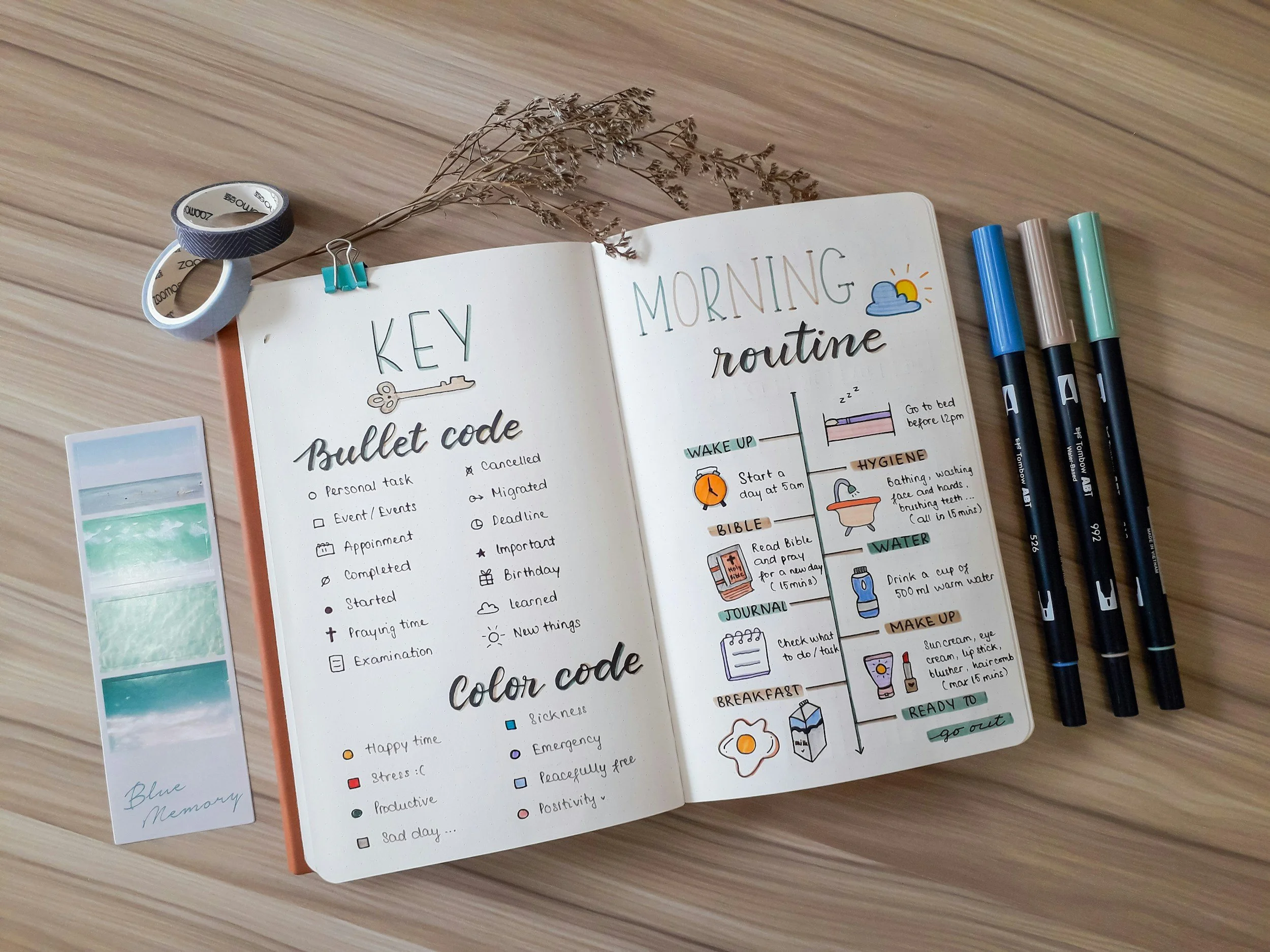
Consistent morning, after-school, and bedtime routines reduce the mental effort required to figure out what comes next. The more automatic a routine becomes, the less executive functioning it requires.
This might include a familiar morning checklist that you say with them every morning:
"Shower. Deodorant. Clothes. Breakfast. Teeth. Backpack. Lunch. Chromebook."
Say it enough times, practice it consistently, and eventually it becomes a little mental checklist they can work through independently.
2. Give Important Things a Home
Designate specific places for backpacks, shoes, keys, chargers, and school materials. When everything has a predictable place, there's less to remember and fewer frantic searches.
At our house, we have hooks and drawers in the mudroom for each kid's coat, backpack, binder, and other everyday school supplies. We also have a charging station in our bedroom where laptops and phones spend the night. This ensures devices are charged and ready for the next day, with the added bonus of eliminating access to screens overnight.
A little environmental structure can go a long way.
3. Make the Invisible Visible
Calendars, checklists, visual schedules, and written reminders help kids keep track of responsibilities without having to hold everything in their heads.
I've found that having kids write things down in their school-issued planners helps keep everything in one place. Even a brightly colored sticky note with their own handwritten reminders on the front of a binder can cue them to complete their tasks independently.
The important thing is to develop a system they'll actually use.
4. Break Big Tasks Into Smaller Steps
"Clean your room" can feel like an enormous and overwhelming task.
"Put your dirty clothes in the hamper" is a much more manageable starting point.
Help kids learn to break larger tasks into smaller, concrete steps. As they get older, encourage them to identify those steps themselves.
This supports planning, organization, and task initiation while making overwhelming responsibilities feel more manageable.
5. Make Time Concrete
Many kids struggle to accurately estimate how long things will take. Visual timers, countdowns, and clocks can help them develop a better sense of time.
Try asking, "How long do you think this will take?" Then compare their estimate with how long it actually took.
Over time, this helps kids develop a more realistic understanding of time and how to plan for it.
6. Reduce Distractions and Decision Fatigue
Sometimes the environment can do some of the executive functioning work for us. Create spaces where kids can focus, prepare materials ahead of time, and reduce unnecessary distractions.
As it turns out, the cozy window seat in our house is far better suited for watching YouTube videos than completing homework or checking grades. The kitchen table, where there's a little more accountability for what's happening on the screen, tends to result in much more efficient work completion.
Sometimes a change in location is more effective than another reminder to focus.
7. Think Out Loud
Let your kids hear how you plan, prioritize, and solve problems.
"We need to leave at 8:00, so I'm going to pack my bag tonight."
"That project is due Friday. Let's work backward and figure out what needs to be done each day."
"I thought I'd have time to do both of these things, but now I need to decide which is more important."
When we make our own thinking visible, we give kids a model for how to approach similar situations independently.
8. Ask Questions Instead of Giving Constant Reminders
Rather than saying, "Get your backpack!" try asking, "What do you need before we leave?"
Instead of, "You need to finish that assignment tonight," ask, "What's your plan for getting that finished?"
These small shifts encourage kids to practice planning, anticipating, and problem-solving rather than relying on us to do all of that thinking for them.
Of course, some children will still need direct reminders. In this case, make a list together and then just prompt them to check their list.
The goal is to gradually move from telling them what to do toward helping them figure it out themselves.
9. Provide Support, Then Gradually Step Back
Perhaps most importantly, remember that executive functioning skills develop through practice.
Initially, your child may need you to sit beside them, help organize a task, or walk through a checklist together. As they demonstrate greater competence, gradually transfer more of that responsibility to them.
The goal isn't to eliminate support overnight. It's to provide just enough support for success while creating opportunities to build independence.
Think of it as scaffolding. We provide the structure while the skills are developing, then gradually remove it as those skills become stronger.
How Can Therapy Help With Executive Functioning Challenges?

When people think about therapy, they often imagine talking about feelings, relationships, or difficult experiences. And while those are certainly important parts of therapy, therapeutic work can also help children, teenagers, and adults better understand and manage executive functioning challenges.
Sometimes that starts with understanding why someone is struggling.
A child who repeatedly forgets assignments isn't necessarily irresponsible. A teenager who can't seem to get started on homework isn't necessarily lazy. And an adult who struggles with deadlines isn't necessarily unmotivated.
Knowing what needs to be done and being able to consistently do it are two different things.
Therapy can help individuals identify the specific skill deficits that are getting in their way, develop practical strategies that work for their unique needs, and address the frustration, anxiety, or discouragement that often accompanies these challenges.
Therapists can also work with parents to create environments that promote independence, establish realistic expectations, and identify when to provide support and when to step back.
Perhaps just as importantly, therapy can help individuals recognize and celebrate their progress, building the self-awareness and confidence necessary to keep trying when things are difficult.
The Bottom Line: Building Executive Functioning Takes Practice
Executive functioning challenges can affect nearly every aspect of daily life, from getting ready for school to managing responsibilities, maintaining relationships, and navigating big emotions.
With the right combination of understanding, practical strategies, emotional support, and opportunities for practice, children, teenagers, and adults can become increasingly effective at managing the demands of everyday life.
Our job as parents isn't to become our children's permanent planners, organizers, or reminder systems. It's to help them develop the skills and systems they'll eventually use to manage those responsibilities themselves.
And sometimes, that starts with replacing "Why won't you just do it?" with a much more useful question:
"What's getting in the way, and what might help?"
Executive Functioning Support at Wasatch Learning & Wellness
At Wasatch Learning & Wellness in Sandy, Utah, we understand that executive functioning challenges can affect children, teens, and adults in many different ways. Difficulties with organization, planning, time management, task initiation, and follow-through can impact academic performance, daily responsibilities, relationships, and confidence.
Our team offers psychological evaluations, therapy, and executive functioning coaching to help individuals better understand their strengths and challenges while developing practical strategies for everyday life.
If your child is struggling with organization, completing assignments, managing responsibilities, or becoming more independent, you don't have to figure it out alone.
Not sure where to begin? Schedule a free consultation with our Intake Coordinator, Dr. Kara Peterson, to discuss your concerns, ask questions, and determine which services may be the best fit for you or your child.
A little bit about the author:
Nicole Stewart, PhD | Licensed Psychologist | Clinical Director of Wasatch Learning & Wellness
"Dr. Nicole Stewart is a licensed psychologist, co-owner of the practice, and former school psychologist with over two decades of experience supporting families and schools in Utah. She specializes in comprehensive psychological evaluations that reveal a person’s unique strengths and provide actionable roadmaps for school and home support."
