
Parenting From 10 Paces Behind: The Messy and Glittery Process of Adolescent Individuation
Anybody else experienced the whiplash of going out in public with your kid—somewhere in that sweet spot between 11 and 18—only to realize you are being treated like an undercover operative they've been forced to travel with against their will?
They communicate strictly in embarrassed grunts, brief phrases, and a deeply condescending tone.
It's a special season.
I have three kids in that window right now. And if I'm being completely honest, I never know who is going to be wildly embarrassed by my mere existence on any given day.
The Little
She is a ripe 11 and entering middle school. We haven't quite hit the phase where she is mortified to be seen with me, but she has been horrified by my communication in the drive-through line on more than one occasion.
She is utterly overcome by the drive to wear the "right" thing and quick to tell me, "Mom, you don't know what teenagers wear."
For a recent school tour, the right thing apparently included a ruffly shirred top, short shorts, cowboy boots, and face glitter—all while cuddling a fluffy stuffed cat under her arm.
I know this is how personal style develops, but Lord, it is painful to witness.
Still, I have the deepest compassion for this transition.
We are sending our babies from the safe, nurturing cocoon of elementary school straight into the lion's den of middle school. It's a world of six different teachers, unfamiliar and potent smells, heavy organizational expectations, creaky voices, zits, and sudden body hair.
It's a lot.
The Middle
He is entering high school.
I couldn't, in good conscience, just send him off to the campus blindly with his older brother, so I took him to get his school picture taken and walk his schedule before the official first day.
Every moment was a comedy of contradictions.
He would look at me with genuine concern when he didn't know where to line up, but the second he got the information, he would stand as far away from me as humanly possible and didn't bother to face me to give me a response.
He eventually walked off without saying goodbye.
Later, as we toured his classrooms, he was supremely annoyed that he actually had to keep looking at his phone for room numbers—as if I should have actually memorized his entire schedule, including not only teacher names, but locations too.
The Big
I thought we were done with this phase by his age.
But recently, I walked into his workplace with him to grab a coffee and pick up his tips.
No words were exchanged inside the building.
No eye contact was made.
And eventually, he gave me no direction whatsoever and simply walked out the door, assuming I understood that this meant it was time to go.
I am living through the necessary and humbling developmental task of my teens'individuation.
What Is Adolescent Individuation?

When my babies were young, I was really, really great, you guys.
I was placed on a pedestal and consulted for everything from what to order at a restaurant to how to solve a math problem or spell a tricky word.
I picked out their clothes, styled their hair, and relished in making their Halloween costumes.
But at some point, the resistance began.
This is the necessary boundary line where kids start disconnecting from us so they can learn who they are, what they believe, what they value, and—most importantly—that they can stand on their own two feet.
This developmental process is called individuation.
Adolescent individuation is the gradual process of developing a separate identity from parents and becoming more independent. It is a normal and important part of teenage development, even when it feels incredibly uncomfortable for everyone involved.
Since they are hormonal, mid-sized (or perhaps taller-than-us-sized) people encountering unfamiliar and powerful feelings and drives, the process is inevitably a little clumsy.
Their innate drive to separate from us requires them to take us off the pedestal they once placed us on—and sometimes to become remarkably skilled at noticing and pointing out our every perceived flaw.
This naturally creates friction.
And it can feel especially jarring in relationships that have historically been safe, secure, and deeply connected.
Why Do Teenagers Pull Away From Their Parents?
Neurologically, in the simplest terms, adolescence involves a bit of a mismatch between two systems.
The deeper, more emotional parts of the brain are highly active and increasingly sophisticated. These systems are involved in survival, emotion, reward, motivation, and our rapid responses to perceived threats.
So our teenagers can experience very big feelings, very strong drives, and very intense reactions—sometimes before they even understand what is happening themselves.
Meanwhile, the prefrontal cortex—the part of the brain involved in planning, impulse control, perspective-taking, empathy, and weighing consequences—is still very much under construction.
In other words, the emotional accelerator is working beautifully while the neurological brakes are still being installed.
And that helps explain some of the spectacularly irrational moments of adolescence.
Our teens aren't simply choosing to overreact or make terrible decisions. They are learning to manage a brain that is capable of generating increasingly powerful emotions and motivations while the systems responsible for regulating, evaluating, and putting those experiences into perspective are still developing.
They have the horsepower.
They're still learning how to manage their speed.
How Parents Can Support Teen Independence

Our job in these moments is to act as their "emotional holding tank."
They need us to provide a safe, resilient space that can withstand their raw emotions, impulsive reactions, and baseline anxiety.
Here are a few ways I am trying to navigate this season of parenting teenagers.
1. Don't Take It Personally
Instead of viewing this behavior as evidence of a fragile relationship, remember it may actually be a sign that you are their safest space.
When a toddler throws a tantrum, we don't worry that they don't love us—we know they are tired or overwhelmed.
Teens aren't that different.
They're just bigger toddlers with driver's permits and better vocabularies.
This friction is evidence of healthy and necessary growth.
That doesn't mean we should tolerate disrespectful or harmful behavior. It simply means that a teenager's desire for independence doesn't automatically mean they are rejecting you.
Sometimes, pulling away is part of learning how to become their own person.
2. Hold the Line But Stay Open
Communicating clear boundaries is vital, but so is validating their experience.
It is hard for them when their different worlds collide—like Mom showing up at school or work—and they don't always know how to manage their discomfort.
Conveying that your goal is simply to support them and give them the tools to succeed goes a long way.
It might even result in an apology—or at least a slightly less aggressive grunt.
Teenagers still need boundaries. They still need guidance. And they still need parents who are willing to say no.
But they also need opportunities to develop independence, make age-appropriate decisions, experience natural consequences, and learn that they can come to us without being immediately judged or lectured.
3. Remember the Goal
Your ultimate job as a parent is not to raise a perfectly compliant, perfectly behaved child.
It is to raise a functioning, independent adult.
The pulling away might be incredibly messy right now, but that mess is the exact engine driving their eventual independence.
Our children need opportunities to discover what they think, what they value, what they're good at, and who they want to become.
Sometimes that process involves disagreeing with us.
Sometimes it involves rejecting our advice.
Sometimes it involves insisting that we have absolutely no idea what teenagers wear.
And sometimes, it involves walking ten paces ahead of us in public.
Giving Teens Room to Grow
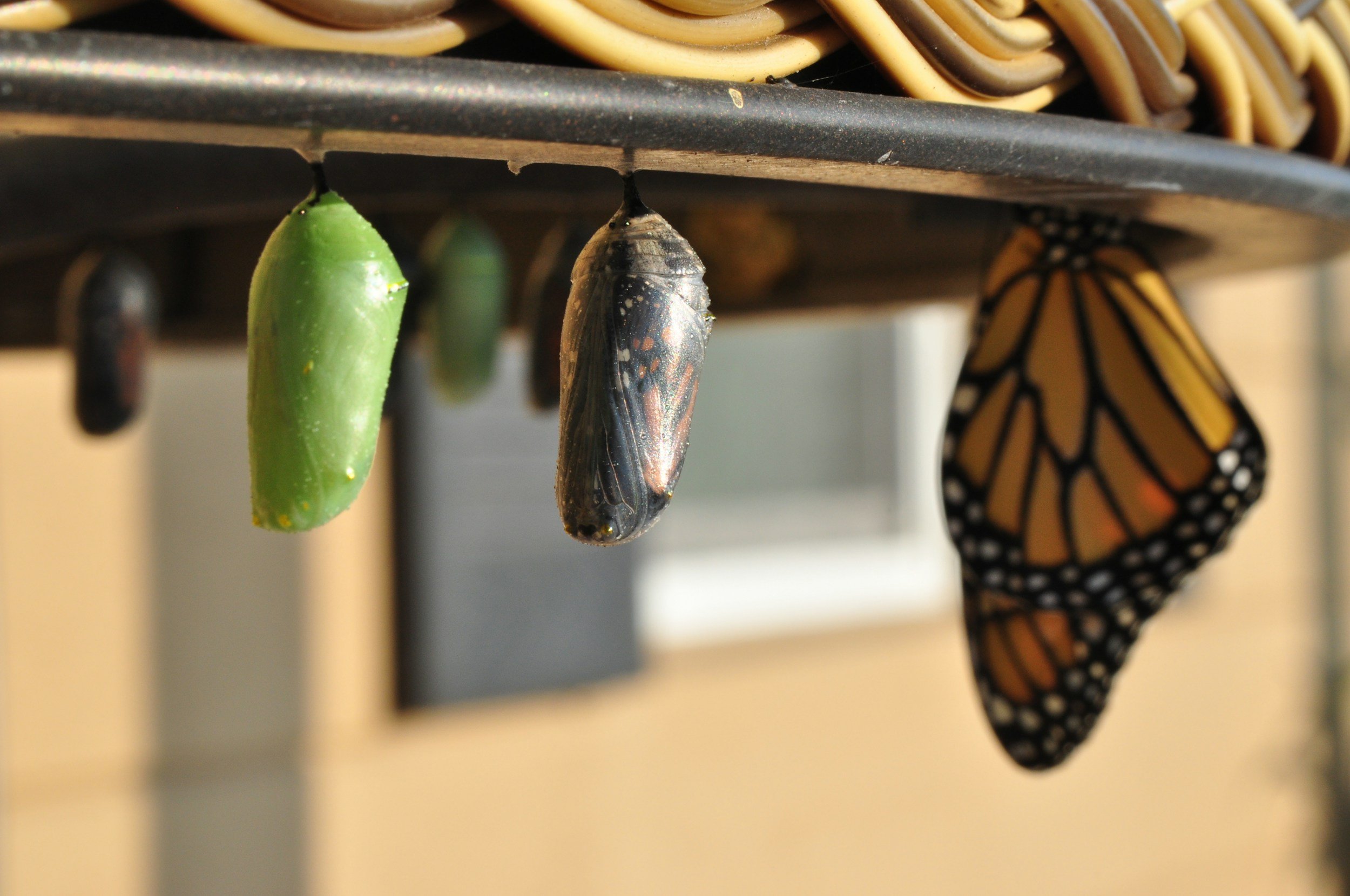
The goal isn't to eliminate the distance.
It's to make sure they know they can always come back.
As parents, we can give teenagers room to grow while remaining a steady presence in their lives. We can respect their growing independence without abandoning our role as parents.
We can let them make mistakes without rescuing them from every consequence.
We can listen without immediately solving.
We can hold boundaries without turning every disagreement into a battle.
And we can remind ourselves that the child who once needed us for everything is slowly becoming someone who needs us differently.
That's the hard part.
And, perhaps, the beautiful part.
So, if you happen to see me out in public, trailing ten paces behind a teenager who is actively pretending I am a stranger asking for spare change, please just smile and nod.
I am trying to respect the growing space between us.
We are doing the sacred, exhausting work of letting go.
And until the day they finally realize we're actually kind of cool—or at least that we pay for the data plans—I will continue to be their emotional holding tank.
Glitter, cowboy boots, grunt-to-English translations, and all.
Supporting Your Teen Through Adolescence
Adolescence can be a complicated season for both teenagers and their parents. Increased independence, emotional intensity, anxiety, social pressures, and changing expectations can sometimes create challenges that are difficult to navigate alone.
At Wasatch Learning & Wellness in Sandy, Utah, our therapists work with teens and families to support emotional regulation, confidence, communication, anxiety, and the many challenges that can come with adolescence.
If you're wondering whether your teen could benefit from additional support, schedule a free consultation with our Intake Coordinator, Dr. Kara Peterson. She can help you talk through your concerns, answer questions, and determine what type of support may be the best fit for your family.
About Wasatch Learning & Wellness
At Wasatch Learning & Wellness in Sandy, Utah, we provide comprehensive psychological evaluations for children, teens, and adults, along with compassionate therapy services for ADHD, autism, anxiety, depression, learning differences, and other mental health concerns. Our mission is to help individuals and families better understand themselves through expert, evidence-based care that leads to lasting growth.
Clear Insight. Meaningful Change.
Whether you're seeking answers through a psychological evaluation or looking for ongoing therapeutic support, our experienced team is here to help you move forward with confidence, clarity, and compassion.
Not sure where to begin? Schedule a free consultation with our Intake Coordinator, Dr. Kara Peterson, to discuss your concerns, ask questions, and determine which services may be the best fit for you or your child.
