
Don’t Underestimate the Power of the Family Group Chat
Since my youngest started middle school this fall, I have reliably received a text every day letting me know that she has arrived at school, and then another when she is on her way home.
The most recent:
“Mom, the bus just drove over a squirrel.”
Another favorite arrived when she knew the plan was to go to her brother’s soccer game that night:
“Mom, can I please stay home by myself? Because I’m 11 and next summer I’ll be 12. I need to experiment on being home alone. And I have a small stomich bug.”
And once, I got simply:
“I love you.”
How often do we miss the days of the toddler crawling into our laps for a snuggle? The three-year-old who fell asleep on our shoulder? The wide-eyed, fully engaged kindergartner who desperately needed to tell us about something incredible that happened on the playground?
For their first many years, emotional connection was so easy to recognize. They sought us out, and we responded. They reached for our hands. They climbed into our laps. They asked us to watch, listen, help, hold, and stay.
And then, somewhere along the way, connection started to change.
They stopped grabbing for our hands quite so often. Hugs became less frequent and sometimes even unwelcome. They disappeared into bedrooms and headphones and friends and increasingly complicated lives.
In our house, we have entered the season where emotional connection looks different.
When Connection With Your Kids Starts to Change
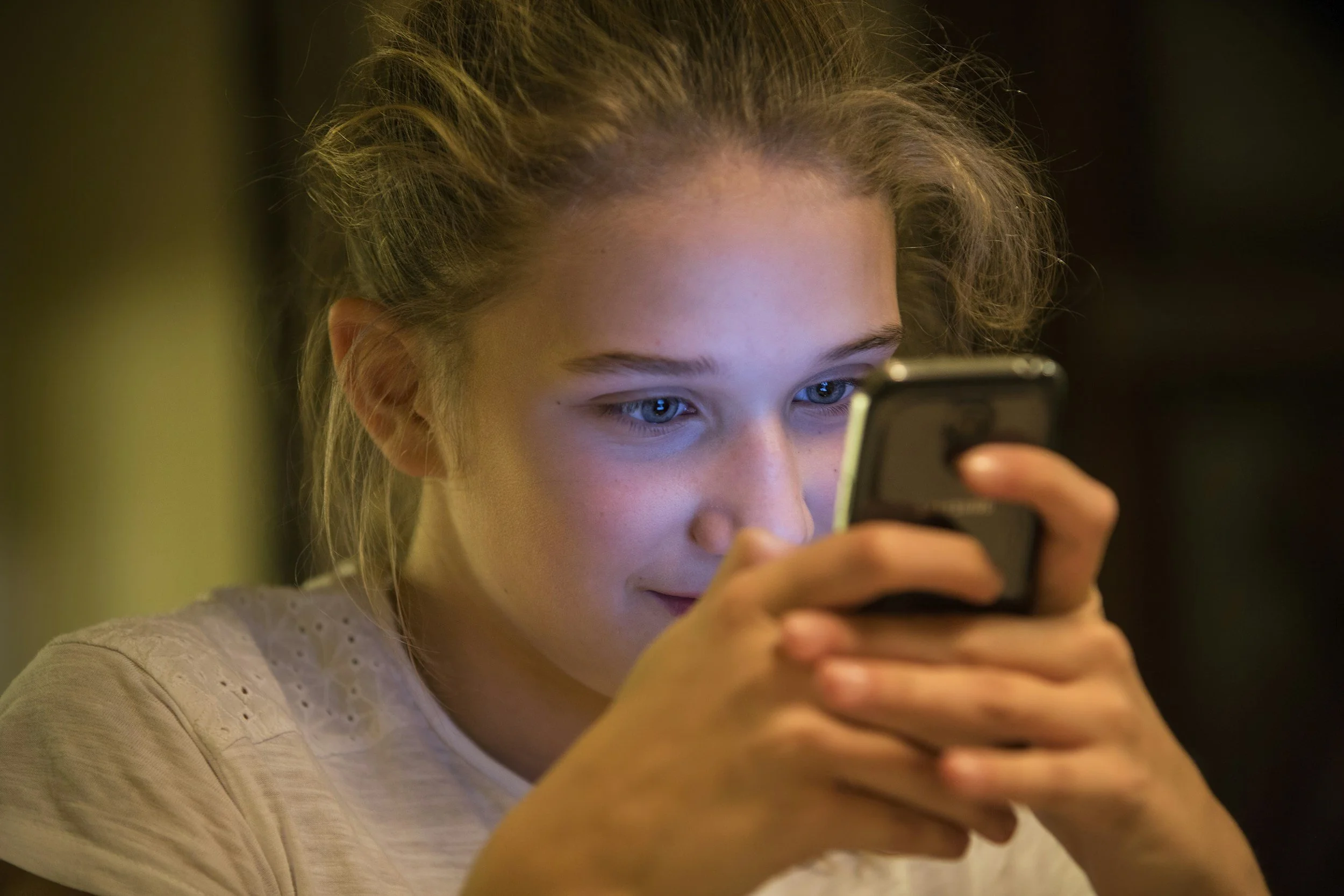
My kids are busy, and a long hug or a face-to-face conversation about anything meaningful can be hard to come by. But there is still plenty of evidence that they are thinking about their dad and me and that they want to share their lives with us.
It just often comes in the form of random photos provided without context, reels, memes, GIFs, screenshots, and text messages.
And I am here for it.
In fact, this kind of communication seems to lower the stakes a little. It gives me a tiny window to sneak in an I love you or a you are killing it at school without requiring anything in return.
Don’t get me wrong. Much of our communication goes something like this: I send several thoughtfully composed sentences containing useful information, proper punctuation, and kind words.
If I get a response, it may be a skull emoji.
Or two letters:
ok
But guys, these regular communications count.
Maybe one of the mistakes we make as our kids get older is becoming so attached to what connection should look like that we miss the ways they are actually trying to connect with us.
Small Moments of Connection Still Count
When your teenager sends you a meme, a photo, a reel, or some completely inexplicable piece of internet nonsense, it can be a bid for connection—a small attempt to get your attention, interest, or engagement.
In my house, this may look like:
An odd, looping GIF of a cat with absolutely no explanation or context
A text asking, “What’s for dinner?” while they are in the next room
A screenshot of a conversation they had with someone
A picture of our dog
A text that simply reads “bro” or, similarly, “yo”
The content of these exchanges may be meaningless.
What they mean to the relationship is not.
In those moments, my kids may actually be saying:
This made me think of you.
You’ll understand this.
I knew this would make you laugh.
Or simply:
Come into my world for five seconds.
Understanding How Teenagers Communicate

Speaking teenager sometimes means learning to recognize and accept this kind of low-intensity connection.
Our adolescents are doing exactly what they are supposed to be doing: gradually separating from us, developing identities outside of the family, relying more on themselves and their peers, and practicing independence. Their worlds are demanding, and sometimes that means they don’t want sustained, face-to-face emotional intimacy every time they connect with us.
Digital communication offers something that teenagers seem to appreciate: connection without too much intensity.
No prolonged eye contact.
No meaty follow-up questions.
No accidental segue into a 25-minute discussion about how school is going, whether they turned in their psychology project, and, while we’re at it, who exactly is Cora?
For parents trying to connect with their teenagers, recognizing these small bids for attention can make a difference. Not every interaction needs to turn into a meaningful conversation. Sometimes, responding with a laugh, an emoji, or a quick message back is enough to keep the door open.
The Family Group Chat as a Digital Kitchen Table
In our house, the family group chat has become a kind of digital kitchen table.
It is where inside jokes are reinforced, embarrassing photos are shared, and mundane updates about everyone’s day appear without warning. The whole family knows that she missed the bus, that he thought he might puke in third period, or that somebody saw a tech (super cool) car on 1300 East.
It is also where the humor unique to our family lives and grows.
And I think this may be one of the most underrated forms of connection.
When we can share a sentence, image, GIF, or video that needs absolutely no explanation, we are communicating something much bigger:
I know you.
I know what makes you laugh.
I know what makes you roll your eyes.
I know the family lore.
I belong here.
Because inside jokes are a kind of shorthand for belonging.
These seemingly insignificant moments can help reinforce a sense of connection within a family. They remind our kids that they are known, that they have a place in the family, and that there are people who understand their particular brand of humor—even when that humor makes absolutely no sense to anyone else.
Digital Connection Doesn't Replace Time Together

Of course, I am still a firm believer that kids need time away from their phones, and digital communication should never replace actually being together. Texting is not equivalent to every other form of family connection.
Kids still need meals together without phones. Conversations in the car. Family traditions. Trips. Being dragged to their siblings’ soccer games. Sitting together on the couch. Our physical presence—even when they appear to be completely engaged in something else.
But perhaps digital communication doesn’t have to compete with those things.
Maybe it can buttress them.
Maybe these hundreds and thousands of tiny digital interactions become another thread running through the relationship, quietly communicating:
I see you.
I know you.
I like you.
I’m still here.
For parents navigating adolescence, this can be a helpful shift in perspective. Instead of measuring connection only by the length of a conversation or the number of hugs we receive, we can learn to notice the small ways our teenagers invite us into their lives.
Sometimes, staying connected means asking a thoughtful question. Sometimes, it means listening without trying to fix anything. And sometimes, it means responding to a blurry photo of the dog with the appropriate number of laughing emojis.
The goal isn't to turn every small interaction into a big moment. It's to keep showing up in the moments that are already there.
Finding New Ways to Stay Connected With Your Teen
As children grow, their need for independence changes the way they communicate with us. That doesn't necessarily mean they need us less. Often, it means we have to learn new ways of recognizing and responding to their bids for connection.
For some families, this transition feels natural. For others, adolescence can bring more conflict, withdrawal, or uncertainty about how to communicate effectively.
When parent-teen communication becomes difficult, it can help to step back and consider what your child might be communicating beneath the surface. Therapy can offer teenagers a supportive space to explore their emotions, develop coping skills, and navigate the challenges of growing up. Parent coaching can also help caregivers better understand their child's needs and find practical ways to strengthen their relationship.
At Wasatch Learning & Wellness in Sandy, Utah, we support children, teens, and families through therapy and parent coaching tailored to their individual needs. Sometimes, understanding your child means finding a new way to meet them where they are.
Because connection doesn't always look the way we expect it to. And sometimes, the smallest interactions are the ones that help keep us close.
Someday, the basement bedrooms will be vacant. There won’t be belts hanging from the barstools or milk cartons left sitting on the counter all day. I won’t know who missed the bus or who almost puked in third period.
But I sure hope my phone keeps buzzing.
A meme.
A picture.
A completely unexplained screenshot.
And I hope I’ll still know exactly what they are saying:
This made me think of you.
About Wasatch Learning & Wellness
At Wasatch Learning & Wellness in Sandy, Utah, we provide comprehensive psychological evaluations for children, teens, and adults, along with compassionate therapy services for ADHD, autism, anxiety, depression, learning differences, and other mental health concerns. Our mission is to help individuals and families better understand themselves through expert, evidence-based care that leads to lasting growth.
Clear Insight. Meaningful Change.
Whether you're seeking answers through a psychological evaluation or looking for ongoing therapeutic support, our experienced team is here to help you move forward with confidence, clarity, and compassion.
Not sure where to begin? Schedule a free consultation with a psychologist to discuss your concerns, ask questions, and determine which services may be the best fit for you or your child.
